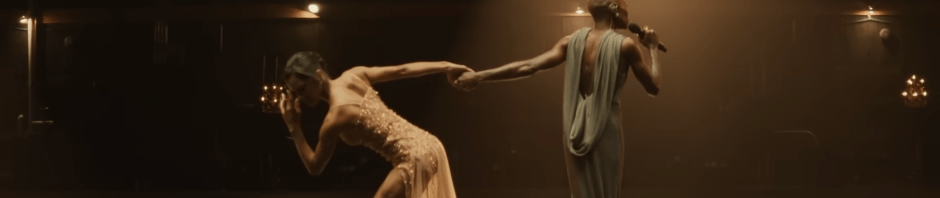

I just watched Cynthia Erivo and Misty Copeland’s collaborative video, a stripped-down, haunting rendition of “No Good Deed” from Wicked: For Good, is an absolute triumph of artistic fusion. Erivo’s raw, powerful vocals are accompanied only by a violin and cello, drawing the listener deep into Elphaba’s emotional turmoil with an intimate intensity that differs from the usual sweeping orchestration. I LOVE the simpler arrangement. Simultaneously, the recently retired Misty Copeland channels the song’s energy through exquisite, visceral, and expressive choreography, a seamless, cinematic conversation between voice and movement that showcases her incredible grace and strength as one of the world’s most luminous dancers. She is a Black American ICON. Of course, I love the color palette of the fashion. Still plan on the Glinda and Elphaba imagery but softer with the perfectly draped sage green and sheer sandy blush gowns. The result is a breathtaking display of two artistic titans in perfect, soul-stirring sync. Them together has got me thinking about Cynthia’s success here in America over the past 10 years.
Cynthia Erivo’s explosive success on the American stage and screen, contrasting sharply with the “glass ceiling” many Black British talents bump their heads against in the UK, underscores the profound foundational work of Black American artists. The US, particularly Broadway, offered Erivo a transformative platform she likely wouldn’t have found in Britain, where sources suggest a continued blind spot and less nurturing environment for Black and ethnic talent. Erivo’s breakthrough, starring as Celie in the Broadway revival of The Color Purple, is crucial. This role, rooted in a distinctly Black-American literary and musical tradition, gave her a career-defining opportunity. This, and similar productions exploring the Black experience in America, exist because generations of Black American actors, playwrights, musicians, and artists fought to create spaces and narratives within the US entertainment industry—from the Harlem Renaissance to the civil rights era and beyond.
Now we are NOT in post racial America, but the end roads Black Americans have carved is the legacy we have to revere and protect. This legacy established a dynamic, supportive “community of people that are wanting to welcome you” in the US, as Erivo herself noted, which she found absent in the UK’s more “colder” and competitive scene. Black American artists created the infrastructure, the demand, and the welcoming environment that allowed Erivo’s talent—honed in British schools like RADA—to fully flourish on a global scale, leading to her Tony, Grammy, and Oscar nominations. Her EGOT-likely journey is a testament to both her undeniable skill and the opportunities built by Black Americans dedicated to cultural excellence that Misty exemplifies.
Here is a great video discussing how her success is indicative if the failure of British entertainment to properly recognized Black talent.


 Diamond Stylz